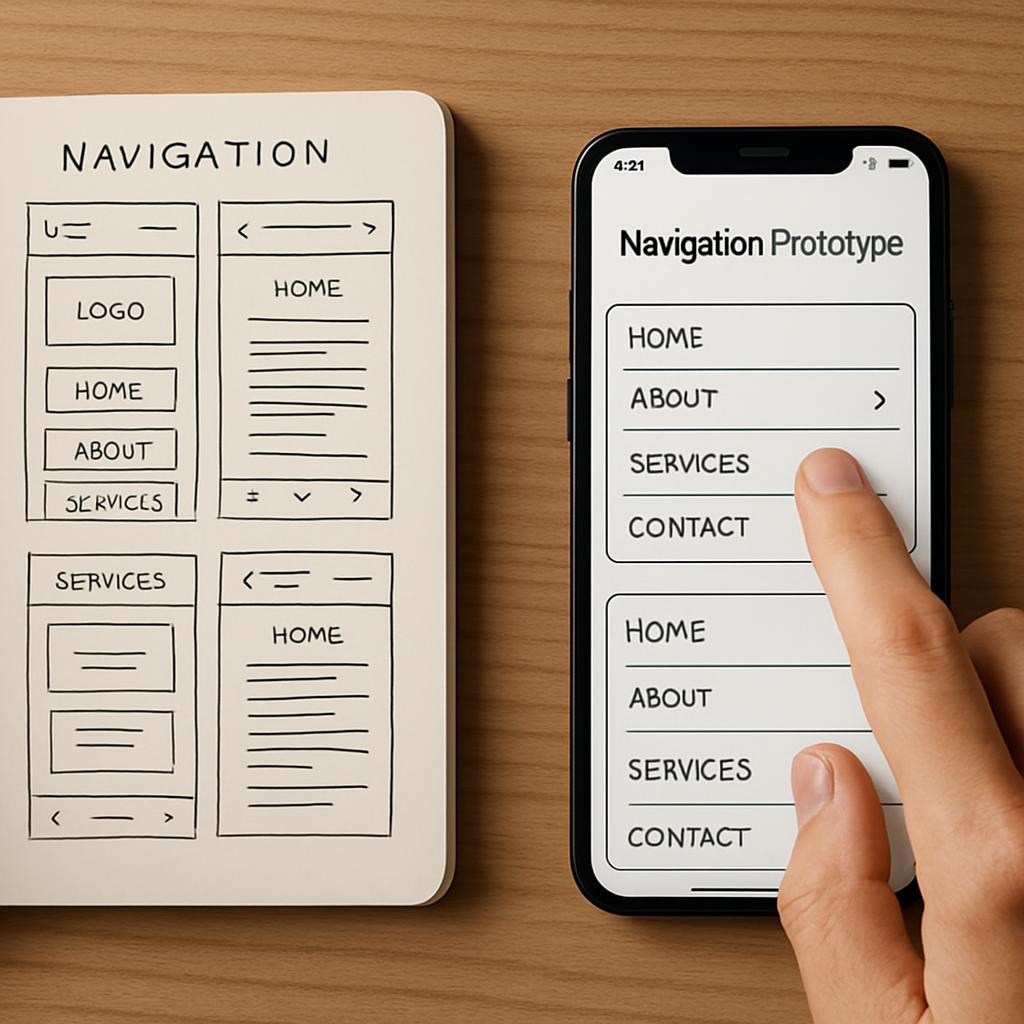
Insights and Case Studies
As a UX developer, I focus on creating engaging, intuitive websites by analyzing user needs and turning insights into functional designs that enhance user satisfaction.
View case studies of my work in e-commerce, website redevelopment and database design and UX design using Figma.
Insights
E-Commerce

Case Study: E-Commerce Site Redesign for WMU
Client: Woman’s Missionary Union (WMU)
Industry: Faith-Based Nonprofit / Educational Resources
Project Scope: E-Commerce Redesign, Information Architecture, Product Management, Platform Integration
Overview
WMU, a nonprofit organization providing curriculum and resources to support mission education in churches, approached us with the need to redesign their outdated e-commerce platform. They required a modern, efficient, and scalable solution to streamline online sales and better serve their customers.
Objectives
- Launch a redesigned e-commerce site with a modern, templated design.
- Migrate product catalog and integrate with new storefront software.
- Create a scalable information architecture to support inventory and fulfillment.
- Support internal teams during the transition to the new platform.
Solution
To expedite the project while ensuring high design quality, I guided WMU’s marketing staff through the adoption of a templated site design. This allowed for faster implementation without compromising user experience or brand identity.
Once the design framework was in place, I led the development of the site’s information architecture, laying the foundation for product organization and inventory integration. This included:
- Designing the database schema to align with WMU’s newly purchased storefront software.
- Establishing the connection between the new platform and the company’s warehouse services for streamlined fulfillment.
- Categorizing the entire product catalog and writing detailed product descriptions to ensure clarity and consistency across the storefront.
Role & Execution
As the primary point of contact throughout the project, I coordinated between WMU’s marketing team and the technical implementation team. I ensured that design, data, and technical requirements were clearly translated and met during each phase of the migration and go-live process.
Results
- Successfully launched a redesigned, templated e-commerce site on schedule.
- Established a fully integrated system between the online storefront and warehouse fulfillment.
- Enhanced user experience with well-organized product categories and clear descriptions.
- Enabled WMU’s internal teams to independently manage content and product updates post-launch.
Insights
Website Redesign & Data Integration
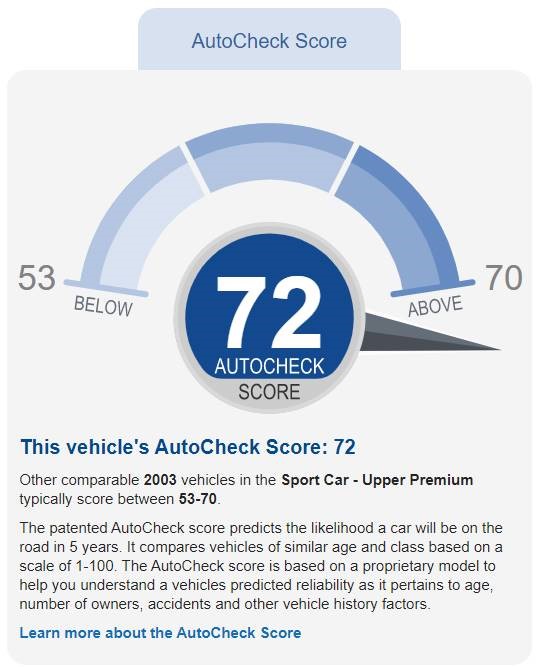
Case Study: AutoCheck Website Redevelopment & Data Integration
Client: AutoCheck (later acquired by Experian)
Industry: Automotive / Vehicle History Reporting
Project Scope: Website Redevelopment, Database Integration, UI/UX Design, XML Schema Development
Overview
AutoCheck, a vehicle history reporting service, initially received a website that was incomplete and non-functional. I was brought in to rescue the project and deliver a working, customer-ready platform capable of generating and delivering real-time vehicle history reports.
Objectives
- Redevelop the broken website to connect with AutoCheck’s vehicle history database.
- Design a user interface that could serve both consumers and auto dealers.
- Develop a scalable architecture to support a rapidly growing database of over a billion vehicle records.
- Create flexible reporting formats via XML/XHTML for different customer segments.
Solution
I began by reworking the existing website infrastructure to ensure it could properly connect to our backend systems. This included integrating the platform with AutoCheck’s vast vehicle history database and ensuring accurate, real-time data delivery to end users.
As part of the core team responsible for scaling the vehicle history database, I helped develop a system that ultimately held over one billion records, powering both consumer and commercial reports.
On the front end, I designed the user interface to accommodate multiple report types and user groups. To support this, I created an XML schema that enabled the generation and delivery of reports in XHTML format, customized for:
- Individual car buyers looking for detailed vehicle history
- Automotive dealers needing high-level summaries at auction
Role & Execution
I served as the lead on both the technical and UX fronts. My responsibilities included:
- Fixing and redeploying the original website
- Architecting database connectivity and report generation logic
- Designing user-facing interfaces for different customer personas
- Developing the XML/XHTML framework for multi-format reporting
Results
Contributed to building a brand and platform that was later acquired by Experian, where it continues to operate as a successful business
Successfully launched a fully functional e-commerce platform for vehicle history reports
Supported a robust and scalable vehicle data engine with over 1 billion records
Delivered custom reporting for both consumer and dealer use cases
Insights
Website Redesign & Data Integration

Case Study: Scalable UX Design for 36 Brands at Neighborly
Client: Neighborly (Parent company of brands like Molly Maid, Mr. Handyman, Mr. Electric, and Mr. Rooter)
Industry: Home Services / Franchising
Project Scope: UX Design, Scalable Templated Web Architecture, User Research, Design System Development
Overview
Neighborly is a leading provider of home services with a portfolio of 36 national brands, each operating thousands of local franchise websites. As a UX Designer and Researcher, I played a central role in creating a unified design experience that could be scaled across all brand and franchise websites throughout North America.
Objectives
- Design modern, brand-consistent websites for 36 national home service brands.
- Build a scalable and localized templating system for thousands of franchise sites.
- Conduct user research to optimize the lead generation flow and improve conversion rates.
- Establish a centralized research repository for ongoing UX insights.
Solution
We began by designing the national brand websites for flagship companies including Molly Maid, Mr. Handyman, Mr. Electric, and Mr. Rooter. These served as the design foundation for creating scalable, localized templates for each brand’s franchisees.
To ensure design consistency and efficiency across all brands, we used Figma to build design systems that included:
- Modular templates for quick deployment across locations
- Brand-specific color palettes, typography, and components
- Guidelines for localized content integration
For the 2.0 release, I conducted targeted user research to identify ways to increase lead flow completions, a key KPI for franchisees. Using platforms like User Interviews and Maze, I interviewed participants matching our key personas to uncover usability issues and optimization opportunities.
Based on this research, we introduced several UX improvements that directly led to an increase in lead conversion rates.
I also built a centralized research repository in Dovetail, enabling cross-functional teams to access insights, track usability trends, and apply findings across future design cycles.
Role & Execution
As the UX Designer and Researcher on the project, my responsibilities included:
- Designing the national brand websites and templated local franchise versions
- Building and maintaining scalable Figma design system
- Conducting qualitative and quantitative user research to support design decisions
- Creating a long-term UX research repository for the company
Results
Built a company-wide UX research repository that continues to inform product decisions
Launched a scalable web design system used by 36 brands and thousands of local sites
Improved lead flow completion rates through targeted UX research and testing
Established a reusable, brand-consistent component library for ongoing design work
 Beth Ann Higgs